Red Cover Luxury monogramRed Cover LuxurySoftware engineering studio

Services

Twelve disciplines, one engineering standard

Services are combined per engagement. Most projects use three or four; a consulting mandate may use one. What stays constant is the way the work is planned, reviewed, tested, and handed over.

  • Custom software development
  • Web application development
  • Mobile product development
  • UI/UX and product design
  • Cloud architecture
  • DevOps and delivery engineering
  • Cybersecurity engineering
  • Data engineering and analytics
  • Artificial intelligence integration
  • Quality assurance
  • Legacy system modernization
  • Technical consulting

01

Custom software development

Business systems built around your domain rather than adapted from a generic template.

We start with the processes the software has to support and the data that describes them. The result is a model that matches how the organisation actually works, expressed in code with explicit boundaries between subsystems. Delivery is incremental: a working slice of the system exists early, and each cycle adds capability rather than scaffolding.

  • Domain modelling and API design
  • Incremental delivery with demo environments
  • Documentation and handover as deliverables

02

Web application development

Fast, accessible web applications that behave predictably on real networks.

We build component architectures that stay legible as feature count grows, with state management chosen for the problem rather than habit. Performance is measured, not assumed: rendering cost, bundle size, and data-fetch patterns are reviewed as part of normal work, and server rendering is used where it improves first paint or indexability.

  • Design-system driven interfaces
  • Server rendering and caching strategy
  • Measured Core Web Vitals

03

Mobile product development

Native-quality iOS and Android products with a sane release process.

Mobile work brings constraints the web does not: intermittent connectivity, background execution limits, store review, and staged rollout. We design for offline behaviour and conflict resolution first, keep a shared API contract with the web product, and automate builds so a release is a routine action rather than a specialist ritual.

  • Offline-first data handling
  • Shared API contracts across clients
  • Automated build and release pipelines

04

UI/UX and product design

Interface design produced alongside engineering, in code-ready form.

We prototype the hardest screens first and validate them against real records, permissions, and error conditions. Deliverables include a token-based design system implemented in the codebase, so visual decisions survive contact with development. Accessibility is a functional requirement: contrast, focus order, keyboard operation, and semantic structure are checked before acceptance.

  • Workflow mapping and prototyping
  • Design tokens implemented in code
  • WCAG-oriented acceptance criteria
Server racks lining a data centre aisle

Infrastructure, delivery, and security

Cloud architecture

Environments defined in code and sized for the workload they actually carry.

We design the topology — networking, compute, storage, identity — and express it as infrastructure code so environments are reproducible. Capacity planning uses observed traffic, and cost is treated as an architectural constraint. Where managed services reduce operational burden without locking the system into a corner, we use them and document the trade-off.

  • Terraform-defined environments
  • Capacity and cost modelling
  • Migration and multi-region planning

DevOps and delivery engineering

Pipelines that take a merged change to production without manual coordination.

Continuous integration runs the test suite, static analysis, and security scanning on every change. Deployment is automated with staged rollout and a rehearsed rollback. Observability — structured logs, metrics, traces, and alerts tied to actionable conditions — is installed with the first deployment rather than after the first outage.

  • CI/CD with staged rollout
  • Observability and alerting
  • Runbooks and on-call documentation

Cybersecurity engineering

Security designed into the system, then verified.

We threat-model the specific application: authentication and session design, authorisation boundaries, data classification, encryption at rest and in transit, secret management, and supply-chain risk. Findings are prioritised by exploitability and impact, remediated in the codebase, and re-tested. Residual risks are documented rather than quietly accepted.

  • Threat modelling and secure design review
  • Identity, access, and secrets management
  • Dependency and supply-chain governance

Data engineering and analytics

Pipelines and models that produce numbers people are willing to act on.

We separate operational databases from analytical workloads, build ingestion that tolerates late and duplicate data, and model the warehouse so metric definitions live in one tested place. Reporting is built on those definitions, which ends the familiar argument about whose figure is correct.

  • Batch and streaming ingestion
  • Warehouse modelling and tested transformations
  • Reporting and metric governance

Artificial intelligence integration

Applied machine learning where it measurably beats the simpler option.

We scope AI features against a baseline: what does the current rule-based or manual approach cost, and what accuracy would justify replacing it. Implementation covers retrieval over your own content, evaluation harnesses, guardrails for sensitive output, cost control, and human review paths. Where a model is not the right instrument, we say so.

  • Retrieval over proprietary content
  • Evaluation harnesses and quality gates
  • Cost, latency, and safety controls
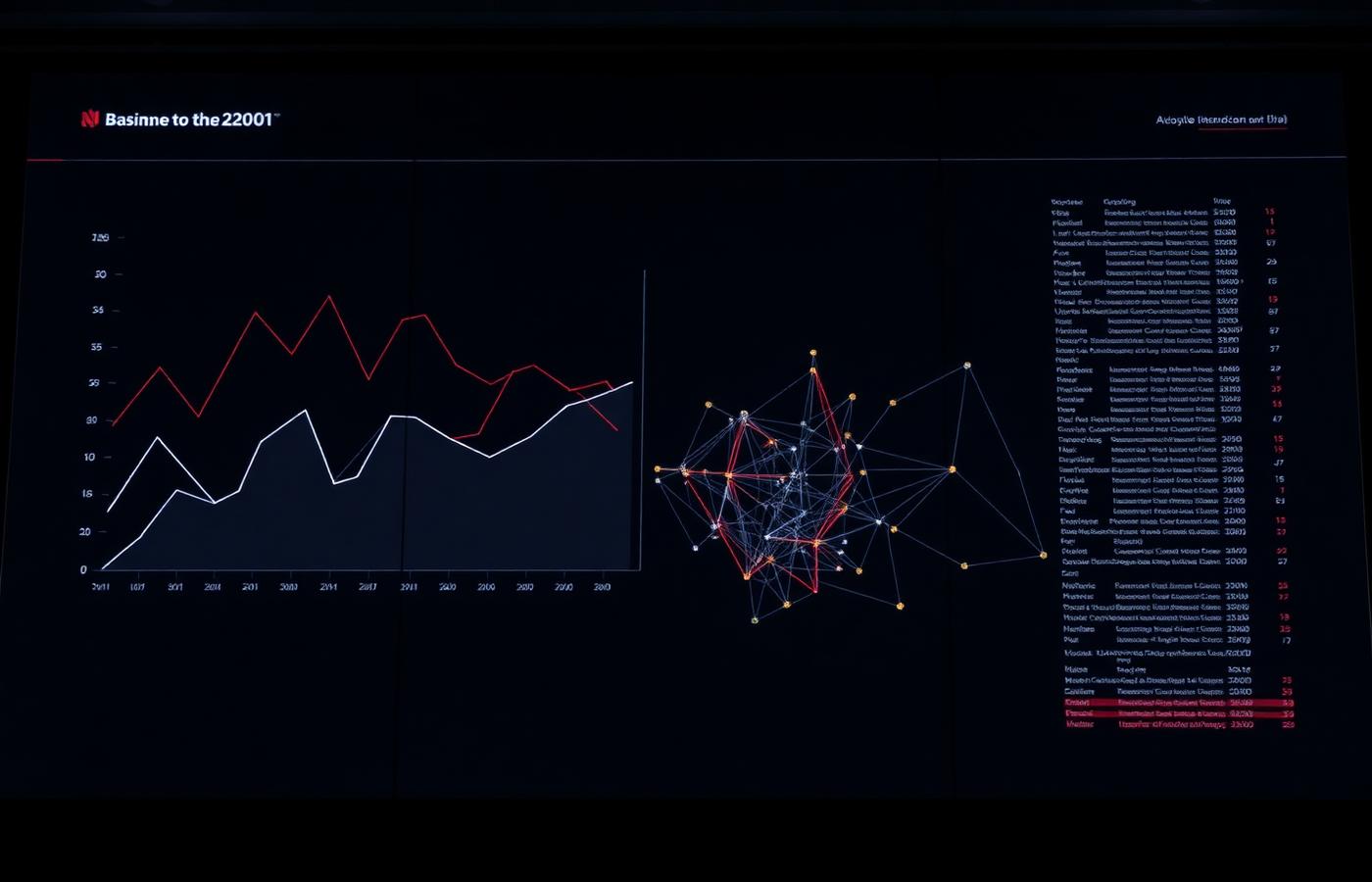
Data analytics charts and a network graph displayed on a dark screenDesigners reviewing printed wireframes and handwritten notes

Assurance, modernisation, and advisory

Quality assurance

Testing as an engineering discipline with owners and evidence.

Test strategy is written per project: what is covered by unit tests, what requires integration or contract testing, and which end-to-end journeys must never break. Load and resilience testing establish behaviour under stress, and accessibility testing is part of the same pipeline. Defects are triaged against a defined severity scale.

  • Layered automated test suites
  • Load, resilience, and accessibility testing
  • Defect triage and release criteria

Legacy system modernization

Incremental replacement of systems that cannot simply be switched off.

We begin by characterising the existing system: what it does, what depends on it, and where the actual pain is. Modernisation then proceeds in slices, with the old and new systems coexisting behind a stable interface and data kept consistent during transition. Big-bang rewrites are proposed only when the evidence genuinely supports them.

  • System characterisation and dependency mapping
  • Strangler-pattern migration
  • Data migration with reconciliation

Technical consulting

Short, focused mandates that produce a decision.

Architecture review, due diligence on an existing codebase, delivery-process assessment, or a build-versus-buy analysis. Each engagement produces a written report: findings with evidence, risks ranked by consequence, and a sequenced set of recommendations your team can execute with or without us.

  • Architecture and codebase review
  • Delivery and process assessment
  • Written findings and sequenced recommendations
Network monitoring dashboards glowing in a dark operations centre

Every service above is delivered under the same conditions: written architecture decisions, reviewed changes, automated tests, and a handover that leaves your team able to continue the work.

Red Cover Luxury

[email protected]

redcoverluxury.com