
Financial technology
Ledger accuracy, auditability, and regulatory reporting where a rounding error is a legal event.

Information technology · Software development
Red Cover Luxury designs, builds, and maintains the systems organisations run on. We take responsibility for architecture, delivery, and the operational reality that follows — the part where software either holds up or does not.
The company
An engineering practice, organised around delivery rather than headcount.
Red Cover Luxury is an information technology company focused on custom software. We work with organisations whose operations depend on systems that must be correct, available, and understandable to the people maintaining them.
Our engagements usually begin where something has become difficult: a platform that resists change, an integration that fails quietly, a product idea that needs to become a shipped application. We start by understanding the constraints, then commit to an architecture and a delivery rhythm.
We are deliberate about scope. Rather than offering everything, we concentrate on application engineering, cloud infrastructure, security, product design, and data — the disciplines that determine whether a digital product survives contact with production.
Six disciplines we practise continuously, and combine according to what a given system actually needs.
Long-lived product codebases with clear domain boundaries, typed interfaces, and test coverage that makes change safe rather than frightening.
Event-driven services, queues, and integration layers designed around failure modes: retries, idempotency, backpressure, and observable state.
Infrastructure as code, reproducible environments, and pipelines that move a change from a merge to production without manual choreography.
Threat modelling, identity design, secret handling, and dependency governance treated as engineering work, not a checklist at the end.
Pipelines, warehouses, and analytical models that produce numbers people trust, plus considered integration of machine learning where it earns its cost.
Design systems and interfaces built with engineers in the room, so what is drawn is what ships, and accessibility is part of the definition of done.

What we deliver
Business-critical applications built from the domain outward, with data models that reflect how the organisation actually works.
Responsive web applications and native-quality mobile products sharing a single design language and a common API surface.
Environment design, cost-aware infrastructure, automated delivery pipelines, and monitoring that answers questions during an incident.
Identity, encryption, and access design alongside pipelines and warehouses that keep analytics trustworthy.
Ledger accuracy, auditability, and regulatory reporting where a rounding error is a legal event.
Sensitive data flows, consent handling, and interoperability with systems that cannot be replaced overnight.
Real-time tracking, routing, and operational tooling used by people working under time pressure.
Catalogue, pricing, and fulfilment systems that stay predictable during demand spikes.
Telemetry ingestion, monitoring, and control-adjacent software with strict reliability expectations.
Internal platforms that replace spreadsheets and manual handoffs with a single dependable workflow.
The sequence is deliberate but not ceremonial. Each stage produces something concrete: a document, a running environment, a release, or a handover.
Stage 1
We map the problem, the constraints, and the systems already in place. The output is a written understanding, not a slide deck.
Stage 2
Decisions are recorded with their trade-offs: data model, boundaries, hosting, failure handling, and what we deliberately leave out.
Stage 3
Short cycles, working software at the end of each one, and a demo environment that reflects the current state of the branch.
Stage 4
Load behaviour, error paths, access control, and observability are addressed before launch, not after the first incident.
Stage 5
Automated deployment, staged rollout, and a rollback path that has been exercised rather than assumed.
Stage 6
Ongoing maintenance, dependency updates, and capacity review, with documentation your own team can work from.
Product design & UX
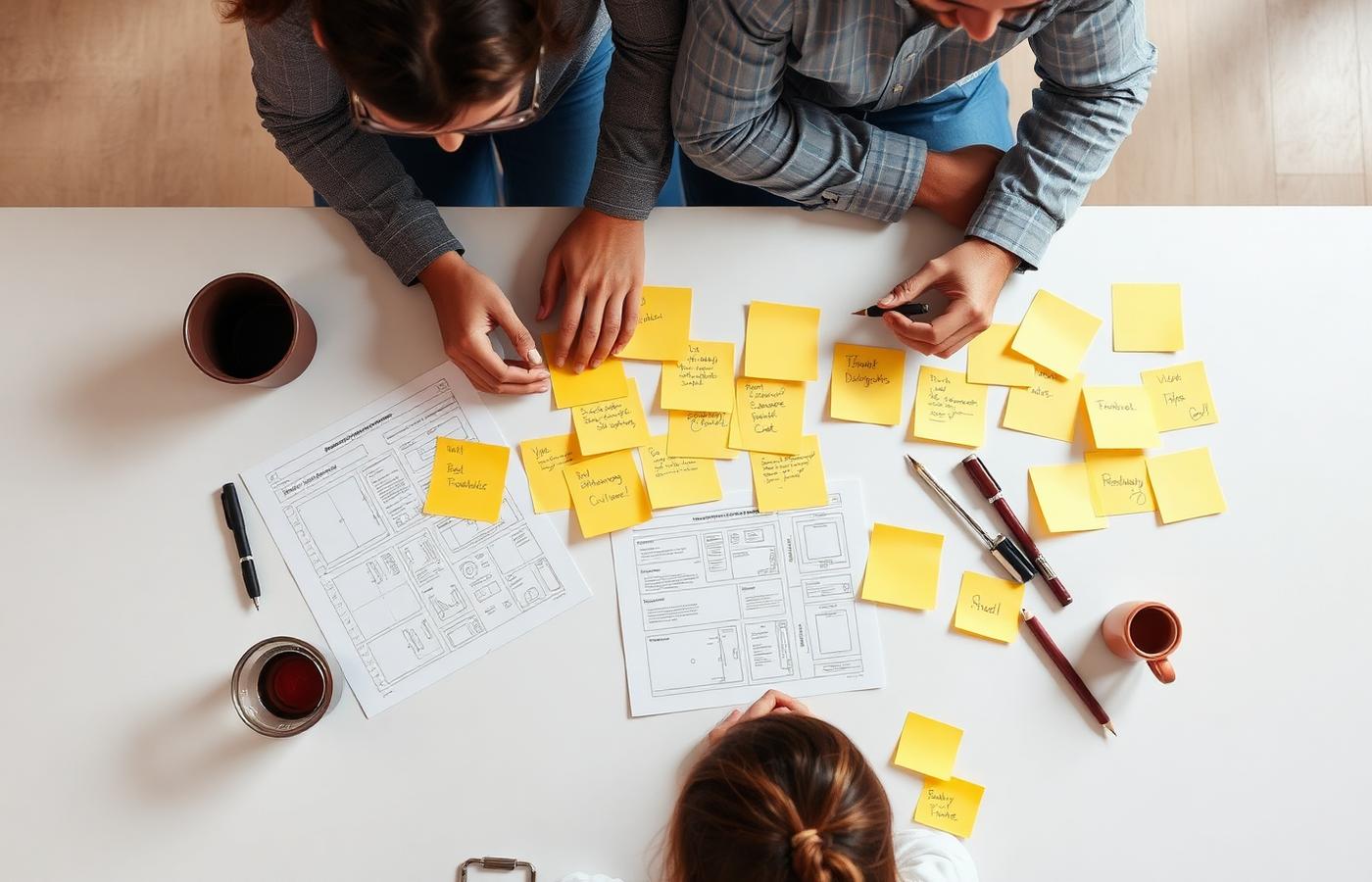
Design begins with the task a person is trying to finish, not with a component library. We map the workflow, identify the states the interface must handle, and prototype the difficult screens first — the empty state, the error, the record with forty rows.
Design systems are delivered as code, with tokens shared between design files and the application. Accessibility requirements — contrast, focus order, keyboard operation, semantic structure — are part of acceptance, which keeps them from becoming a retrofit.

Environments defined in code, provisioned identically from development to production. We size infrastructure for the traffic that exists, plan the path to the traffic expected, and keep cost visible as an engineering metric. Observability is installed from the first deployment: structured logs, traces, and alerts tied to conditions a person can act on.
We model threats against the specific system rather than a generic checklist: who authenticates, what they can reach, where data rests, and how a compromised credential would be detected. Secrets management, least-privilege access, dependency scanning, and reviewed audit trails are part of the build, and we document what remains a residual risk.
Quality assurance
A release is only finished when we can explain, without hedging, what was tested, what was not, and how we would know if it broke.
Unit and integration tests run on every commit; end-to-end suites cover the flows the business cannot afford to lose.
Load, resilience, and accessibility testing are scheduled work with owners, not an optional final sprint.
Every change is reviewed by a second engineer against a shared standard for readability, safety, and test quality.
Described by the nature of the work. Client names and commercial details are confidential unless a client chooses otherwise.
01
Three overlapping internal tools were replaced by one service with a shared identity model and a documented API. Support requests about conflicting data stopped being a weekly occurrence.
Domain modelling · API design · Migration tooling
02
A quarterly, manually coordinated release became an automated pipeline with staged rollout and instant rollback. Deployment ceased to be an event that required a calendar invitation.
CI/CD · Infrastructure as code · Observability
03
Reporting built directly on production tables was moved to a modelled warehouse with tested transformations, so finance and operations finally worked from the same definitions.
Pipelines · Data modelling · Reporting layer
Business value
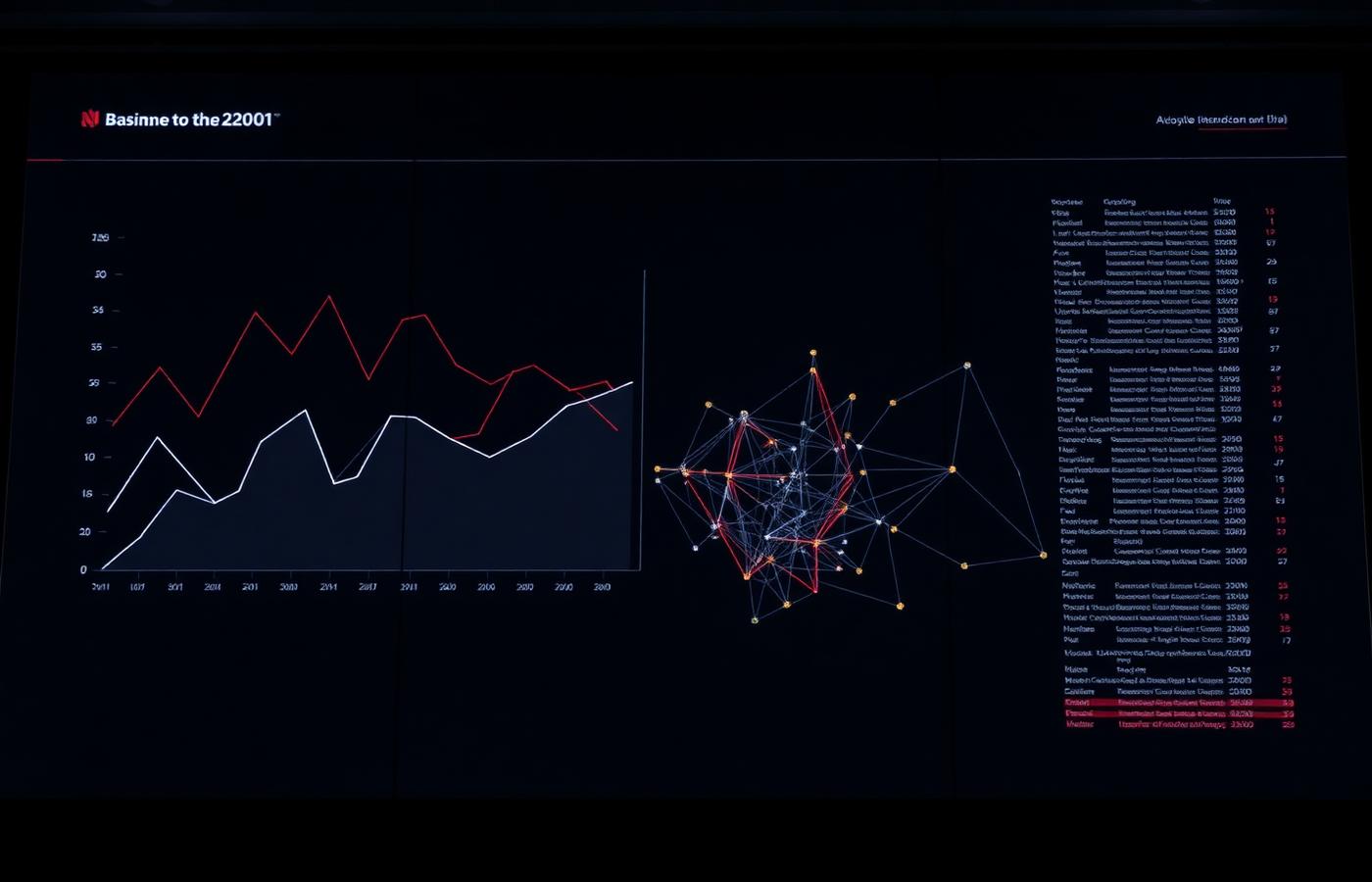
Clear boundaries and real test coverage mean new requirements are implemented rather than negotiated around.
Structured logging, tracing, and alerting turn outages into diagnosis instead of guesswork.
Architecture decisions, runbooks, and onboarding notes are written as the work happens and handed over intact.
Security and compliance considerations are surfaced early, where they are still inexpensive to address.
Estimates, risks, and mistakes are communicated plainly and early. Optimism is not a project plan.
We write code for the team that inherits it, including ourselves. Clever shortcuts are a debt with interest.
Interfaces are designed against real constraints and real data, so the shipped product matches the intent.
Access control, data handling, and dependency hygiene belong in the architecture, not in a late review.
Enquiries about custom software development, cloud architecture, security engineering, or data platforms can be sent to the company by email. The details below are provided as plain text.